
We don’t bring the preconceptions of a house style. We wear our experience lightly, bringing a fresh perspective and curiosity to every project.

Expertise and Understanding
For us, a portfolio that spans sectors is more than accident or strategy. It actively informs our approach to design. We started out in the commercial world, on projects that demanded rigour, discipline and economy. As we designed more cultural, performance and higher education buildings, we were able to draw on that experience. These are spaces for people, conversation, serendipity. Interestingly, that learning process has started to reverse: commercial clients are now learning from our cultural expertise how to make buildings that can truly serve people and bring us back together in the workplace.
Embracing Opportunity
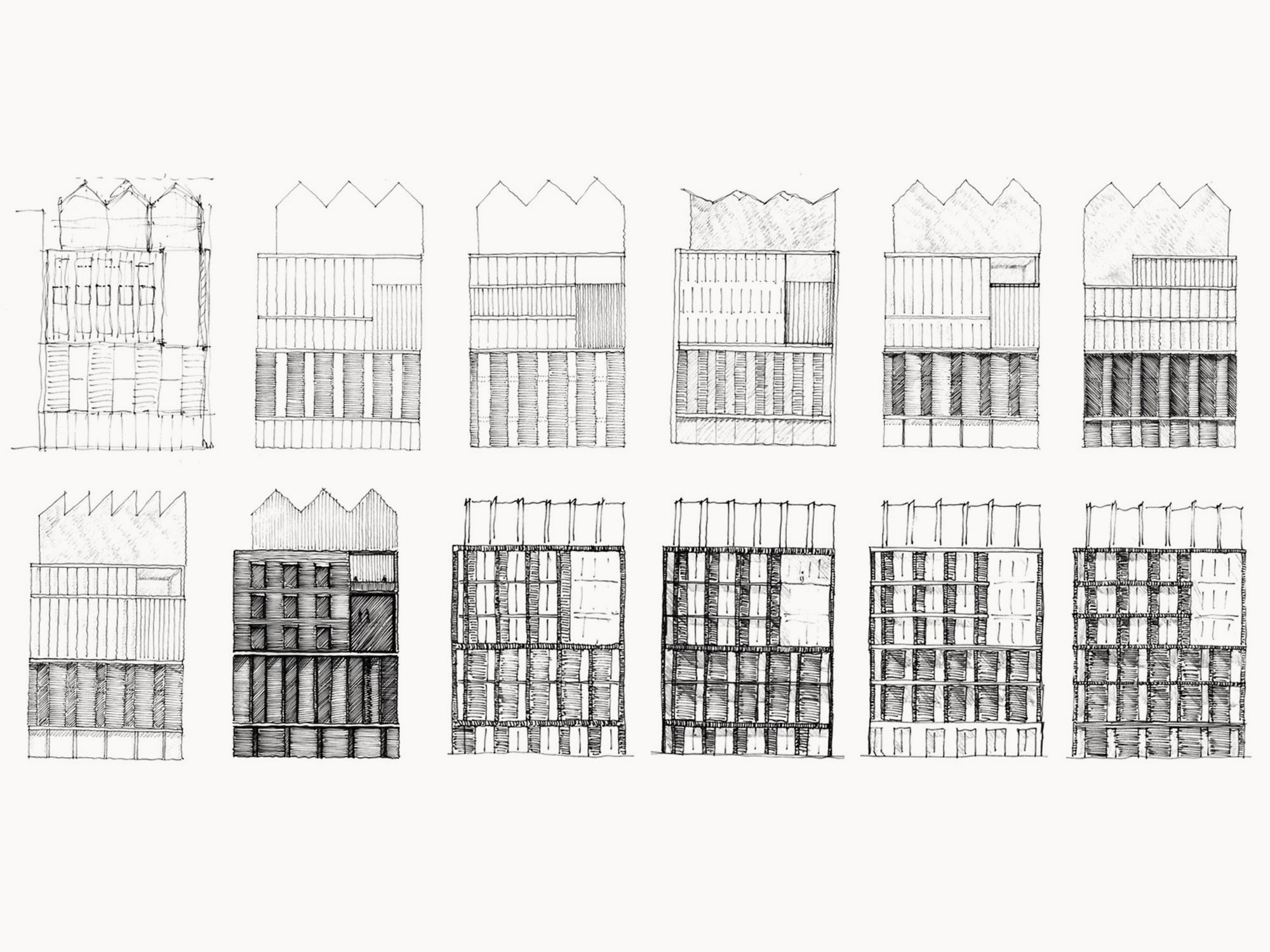
How do we stay ahead when the world, the very nature of our work and the tools we use are changing so rapidly? By embracing opportunities with curiosity and an open mind. We see every project as a step forward, as a new experiment that builds on our existing body of knowledge. We enjoy the limitations of a brief or the constraints of an existing building – not as obstacles, but as prompts for fresh thinking. We never take our work or this responsibility for granted.
Spaces for People
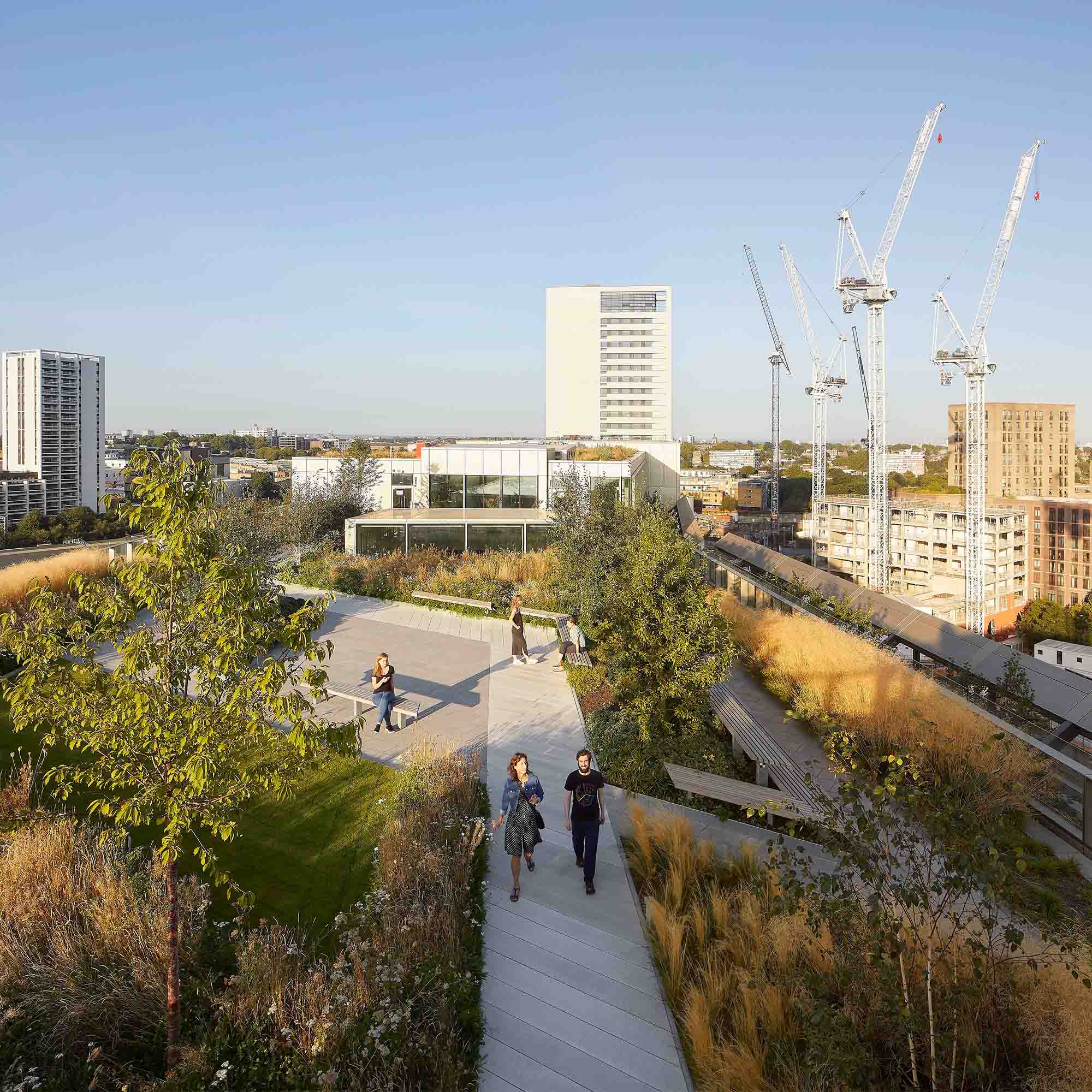
We throw ourselves into every project, but we don’t impose ourselves on it. For us, the focus is always the people that will live, work in or visit a building; the experience of the audience, laboratory researcher, cleaner, artist or teacher.
We lead with integrity, professionalism and humanity; an approach reinforced by our team. We’re not a studio defined by the genius of any single individual, but by our collective creativity and the unique skills and experiences we each bring to the table, supported by a culture of listening and respect.

Simplifying Complexity
Buildings have become far too complicated; to make, to inhabit and to maintain. This complexity benefits few. Certainly not the student trying to find their way around campus, the contractor making sense of drawings on a building site or the future architect adapting the work we’re doing today for new, unforeseen uses.
Instead, we distil intricate, complex problems into elegant designs that make architecture legible. In our approach to this, we talk a lot about restraint – the idea that less, done with care, can achieve more in flexibility and beauty over the long term than conspicuous expression.
Inquisitiveness and Critical Thinking
Being inquisitive, staying curious, means listening, engaging critically with research, being open to new collaborations and to learning from the next generation. Our engagement with schools of architecture, for example, tells us that focus has moved away from composition towards structure, problems, society and resources. It suggests that architecture is undergoing a transformation as profound as the shift from Arts and Crafts to Modernism. The future points to a culture centred on resources, with ‘more with less’ as a central tenet – a principle of thought and action we instinctively apply.