The greatest challenge for architects isn’t simply to design buildings that use less resources. It’s to consistently, over decades, align our principles with actions. This is our impact.

Leading by Example
We’ve been called the ‘unsung heroes’ of the environmental movement. Unsung, perhaps, because our impact is not in big gestures.
Our influence lies in a long record of bringing experimental approaches into mainstream adoption and in meaningful advocacy. We were the first architects to sign the UN Climate Neutral Now pact, the first in the world with approved science-based targets. We’re founder members of the UK Green Building Council, active in establishing RIBA and LETI guidance. What unites all these activities is a commitment to research, to taking action based on data and holding ourselves to account.

Efficiency at Scale
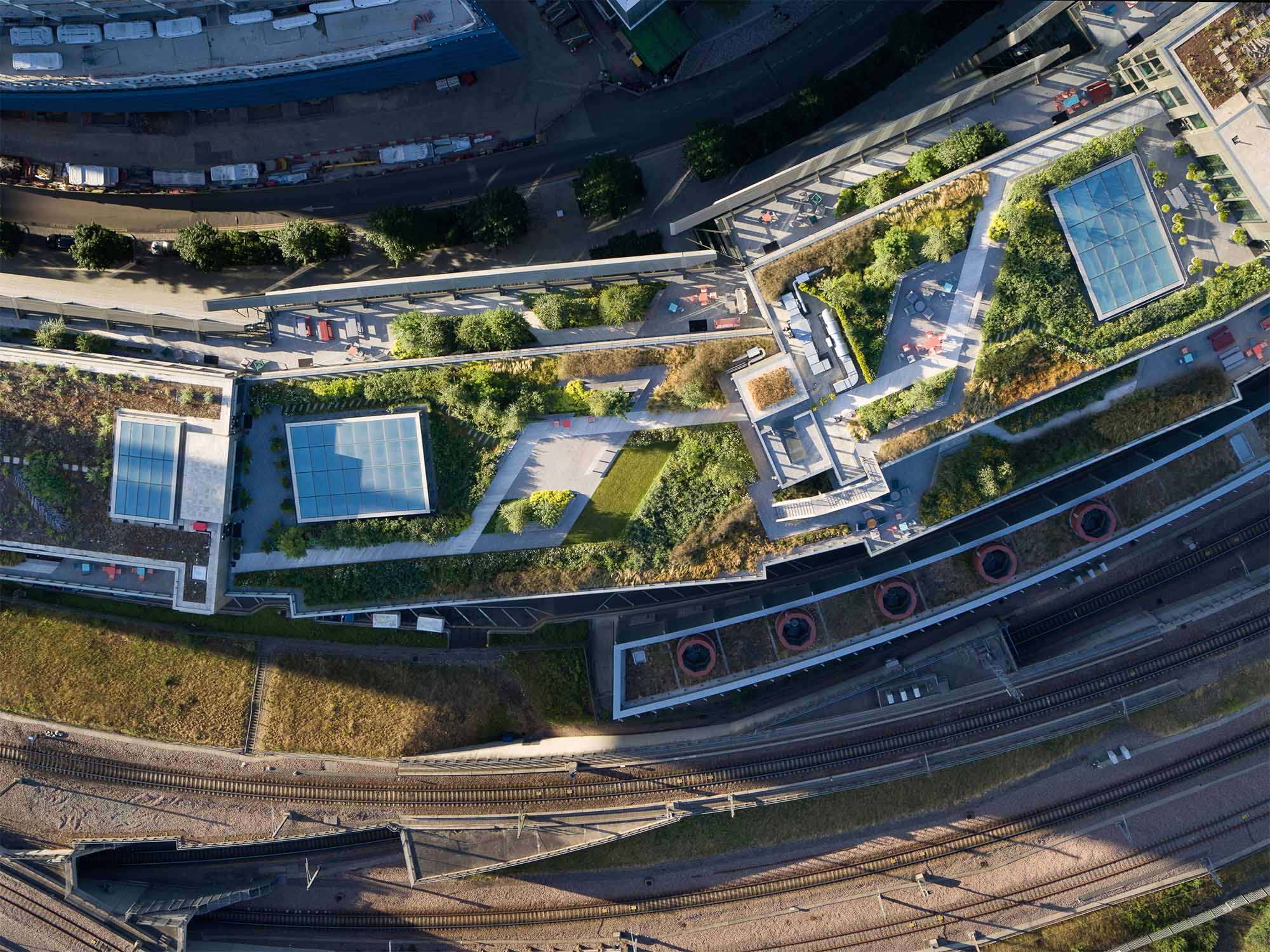
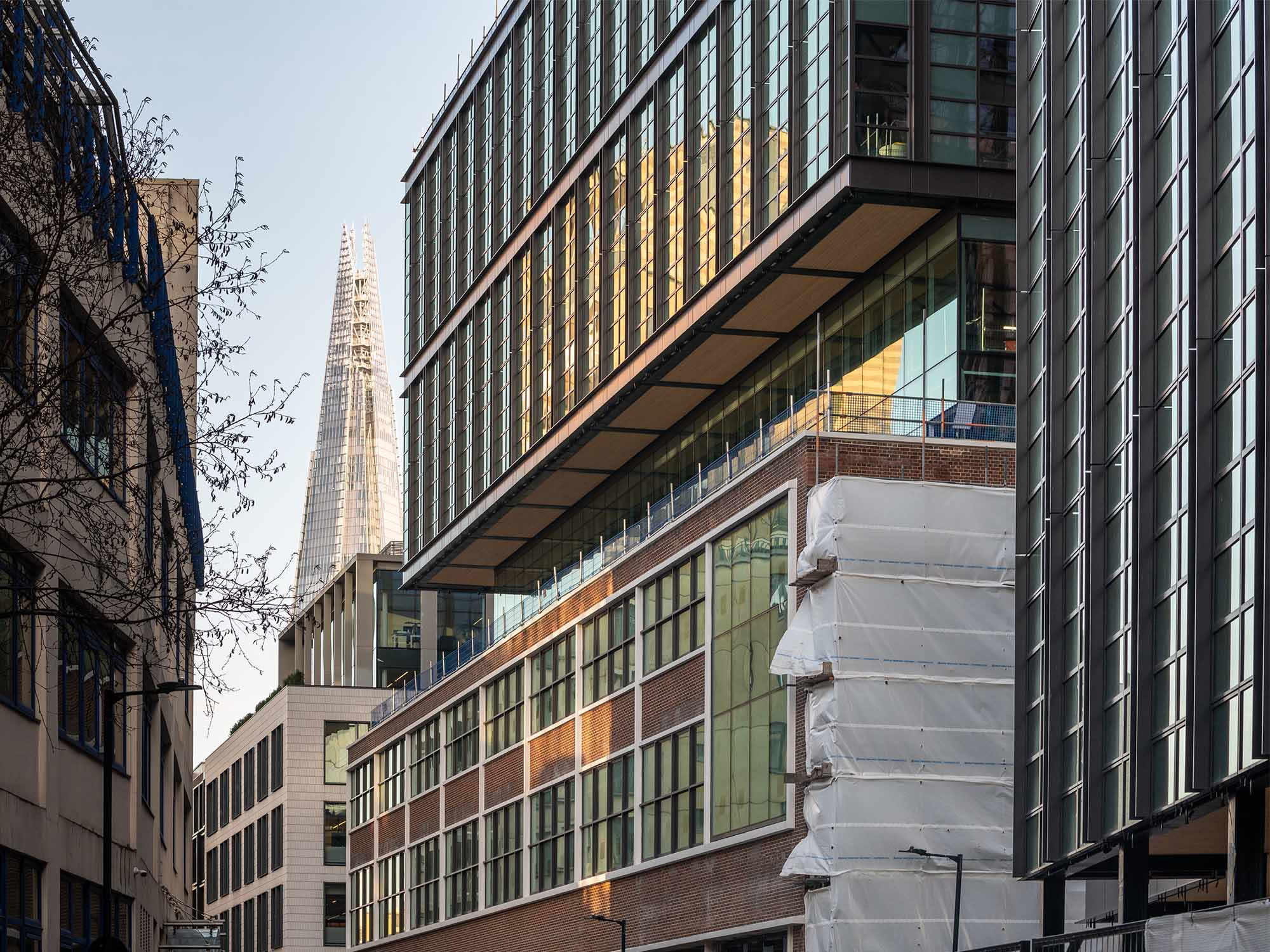
It’s easy to feel discouraged in the face of climate change, but we remain a team of optimists and pragmatists, focused on solutions. We act with confidence in the belief that our work will, even in small, everyday ways, help to create a better world. We’re always conscious that our impact extends beyond any single building. We use our size, our geographical spread and our influence with a sense of responsibility. Because we’re trusted by clients and contractors, we’re able to advance new techniques at scale. With Timber Square in London’s Bankside, for example, Europe’s largest hybrid CLT building – or Copper Square in Brentford, which will be the largest full timber building in the UK.

Repurpose and Reuse
A widely cited statistic suggests that we already have 80% of the buildings that will exist by 2050. The architecture of the past is the fabric of our future. The studio’s approach to reuse, as with every project, is more than façade deep. We consider the essence of a building; seeking out its original logic, then integrating modern facilities with imagination. We have applied this to creative venues, workplaces and the Edinburgh Futures Institute, where we transformed the former Royal Infirmary into a state-of-the-art academic facility. A constant reminder that the value of our own buildings also lies in their capacity to evolve.
Driving Net Zero Carbon Design
It’s not enough for us to simply say we’re aiming for net zero carbon. What sets our practice apart is being clear about how. For example, by contributing our expertise to setting the UK Net Zero Carbon Building Standard. Or in our testbeds for change, from the Robotics Living Lab, a pilot for the new standard, to Timber Square, one of the UK’s first Design for Performance workplaces. Or in benchmarking every project against the most ambitious carbon limits with our sustainability team. Just as our work isn’t restricted to the UK, neither is our net zero ambition; we are developing benchmarks overseas, as well as producing roadmaps for particularly challenging sectors, such as laboratories.

Grounded in Data
In a time of misinformation and shifting politics, facts matter. Transparency matters. Independent research matters. We don’t greenwash, whether it’s in a design meeting, report or a press release. We don’t shy away from post-occupancy evaluations either. We can’t wait to return to analyse exactly how our projects are performing, then feed this insight back into our current work. In this way, we can underpin every decision with evidence, track emissions, publish our carbon reporting and set achievable, measurable targets for every project. We believe that by making impact tangible through data, we make it useful, accountable and can make greater progress towards a net-zero future.
-

BCorp Impact Report 24-25
Our Work
Our third B Corp impact report builds on over a decade of annual sustainability reporting and details our commitment to being transparent about our goals, progress and performance.Download
-
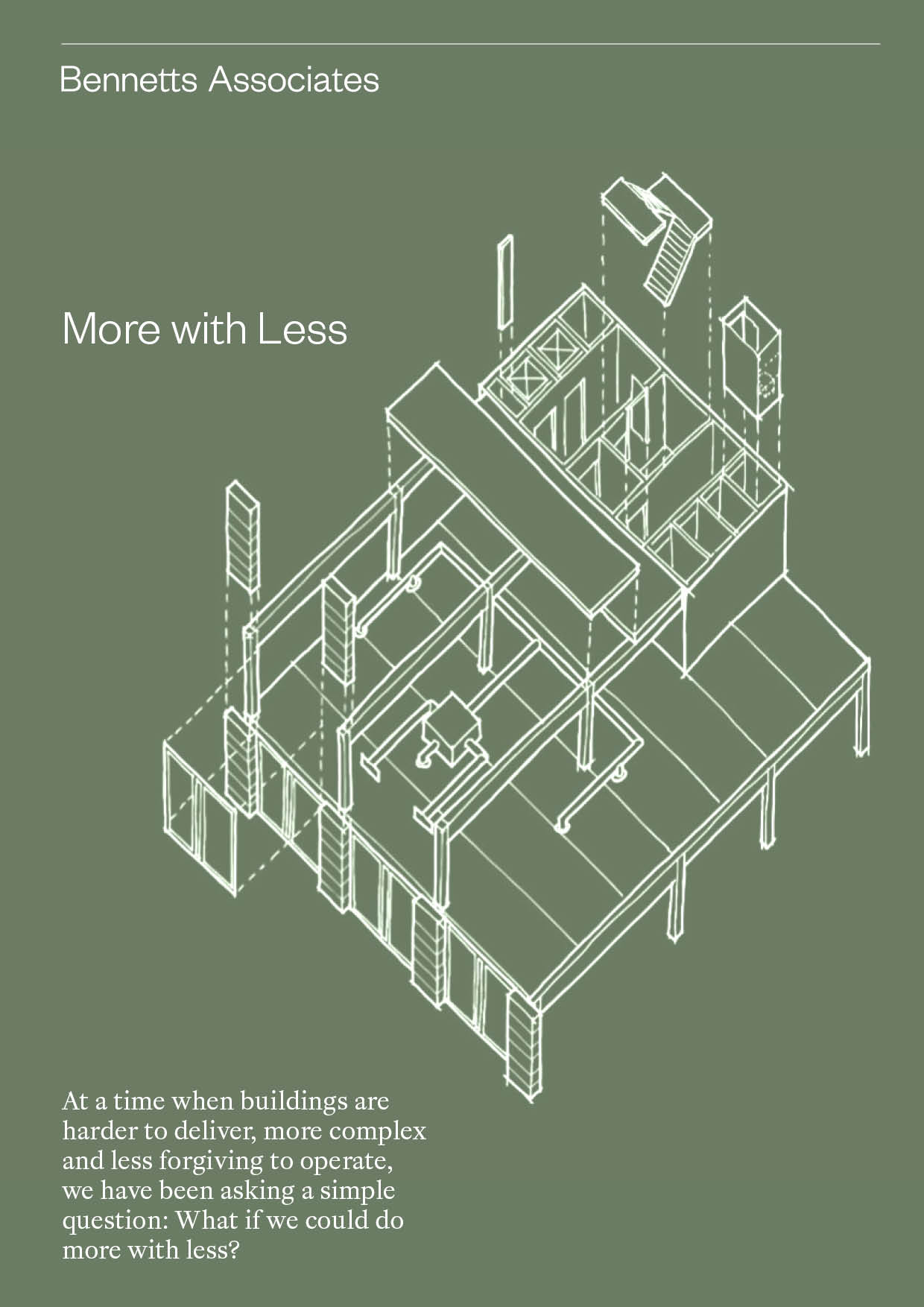
More With Less
Research
At a time when buildings are harder to deliver, more complex and less forgiving to operate, we have been asking a simple question: What if we could do more with less?
Download


Practising What We Preach
The size of our practice is an advantage. We’re big enough to be in a position to bring the latest research into significant projects, but small enough as a company to still know everyone’s names, to maintain that shared sense of purpose and accountability. We initiated a campaign to Tell the Truth, which shouldn’t be a radical position – and yet. It means not making claims about ‘healthier, greener’ buildings, but pinpointing specific design measures and their outcomes.